Choosing Impact Racks for international warehouse operations requires more than comparing prices or steel thickness. These systems protect inventory, equipment, and people during daily forklift movement. A suitable rack must match pallet weight, beam length, aisle width, building height, seismic conditions, and local safety expectations.
As warehouse safety consultant John R. Clark explains, “An impact rack is only effective when its capacity, protection, and inspection routine work together.” This principle deserves attention. A rack may look strong under showroom lighting, yet fail to suit narrow aisles or uneven concrete floors. Global buyers should request load calculations, material specifications, installation details, and inspection guidance before approving an order. Documentation matters.
So does experience.
The following ten tips examine the practical decisions behind reliable Impact Racks. They cover structural design, column guards, pallet dimensions, corrosion resistance, supplier verification, and long-term maintenance. They also consider differences between distribution centers, cold-storage facilities, manufacturing plants, and high-turnover warehouses.
Some choices are easy to overlook. A missing anchor can matter. A poorly placed protector can create a new collision point. Even a small beam deflection may signal overloading or incorrect installation. Buyers should not assume that a familiar rack design suits every country or facility.
There is no perfect specification. Conditions change, and warehouse teams sometimes modify layouts without reassessing capacity. That weakness should be acknowledged early.
Reliable purchasing combines engineering evidence, field experience, and careful supplier communication. The right Impact Racks should support present operations while allowing safer, measured growth.
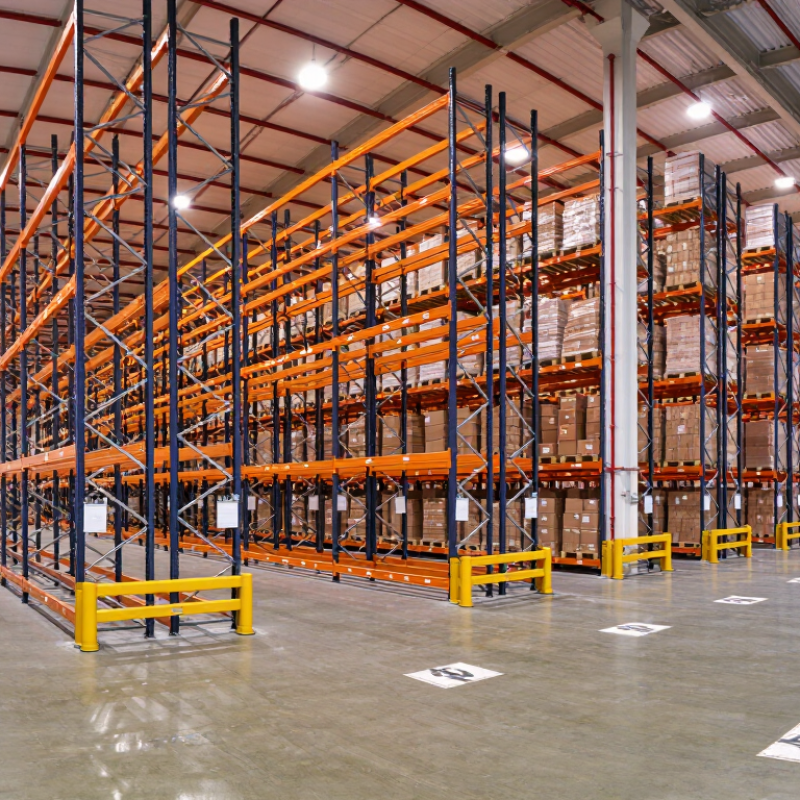
Impact racks are storage systems designed to reduce damage from forklift contact, shifting loads, and repeated handling. They commonly serve warehouses, cold stores, factories, and distribution centers. Their value depends on controlled energy absorption, not simply thicker steel. A rack should match pallet weight, beam height, aisle width, and vehicle type. Check frame capacity, anchor design, upright protection, corrosion resistance, and replaceable components. Confirm clearances around columns and sprinkler systems. Small gaps matter.
Safety data supports this caution. The U.S. Bureau of Labor Statistics recorded 885 fatal work injuries in transportation and warehousing during 2023. Not every case involved racking, but the figure shows why collision control deserves serious planning. The MHI 2024 Annual Industry Report surveyed more than 2,000 supply-chain professionals and identified resilience, labor pressure, and technology adoption as continuing priorities. Impact-resistant storage can support resilience when inspections and operator training work together. Hardware alone cannot solve poor traffic design.
Relevant specifications should align with recognized rack-design requirements, such as ANSI MH16.1 where applicable. Photograph existing dents before selecting protection. Damage is information. A practical assessment should review turning points, blind corners, floor quality, and seasonal load changes. Perfect specifications are rare. I would not hide that uncertainty. A cheaper protector may fit today, yet fail after repeated impacts or temperature changes. Choose measurable performance over attractive descriptions.
Record pallet weight, dimensions, lifting equipment, storage height, and aisle width. Real measurements matter. Ideal estimates can mislead.
Check every beam level’s rated capacity and its stated safety assumptions. Confirm whether the rating requires evenly distributed loads. Uneven pallets can increase stress quickly.
Review upright strength, beam connections, floor anchors, and seismic requirements. Request certified load tables, installation drawings, and inspection guidance. Independent engineering review is wiser for heavy systems.
Dry indoor areas may suit coated steel. Humid spaces may require galvanized finishes. Consider salt air, condensation, chemicals, and temperature changes. Small rust spots matter.
Inspect floor flatness, slab strength, ceiling height, and aisle clearance. Confirm that anchors match the local concrete. Rushed installation creates hidden problems.
Inspect uprights, beams, connectors, anchors, and guards at scheduled intervals. Record dates and photographs. Train operators to report bent steel, loose fasteners, and corrosion immediately.
Choose systems with traceable components, documented capacities, and available spare parts. Confirm future beams and connectors remain compatible. Similar-looking parts may create uncertainty.
Include engineering, packaging, inland transport, ocean freight, insurance, duties, storage, and installation. A lower unit price may require costly modifications. Build a contingency allowance.
Confirm production times, container loading plans, corrosion protection, and destination documents. Check local service capability and replacement-part availability. One missing dimension can cause expensive delays.
Yes. Compare drawings with real traffic patterns, forklift movement, and storage behavior. No checklist catches everything. Revisit the design after the first busy season.
Choosing the right Impact Racks is essential for global buyers seeking safe, efficient, and durable storage solutions. This guide explains how impact racks support demanding industrial applications, from warehouses and distribution centers to manufacturing facilities. It highlights the importance of evaluating load capacity, rack configuration, structural design, and material durability to ensure reliable performance under daily operational conditions. Buyers should also confirm that products meet relevant safety standards and compliance requirements in their target markets.
The guide further examines practical considerations such as installation methods, maintenance needs, component replacement, and long-term adaptability. It encourages buyers to compare suppliers based on product quality, technical support, production consistency, and communication capabilities. Beyond the initial purchase price, total cost analysis should include transportation, customs procedures, installation, maintenance, and potential replacement expenses. By assessing these factors together, international purchasers can select Impact Racks that provide dependable performance, controlled costs, and lasting value across different operating environments.

 Hui Lian