China Top 10 Steel Platforms Manufacturers for Global Buyers

Time:2026-10-08 Author:Amelia
0%

For global buyers, selecting reliable Steel Platforms manufacturers requires more than comparing prices. A platform may look simple, yet its safety depends on design accuracy, material quality, welding control, and surface treatment. Factory experience also matters when platforms must support workers, equipment, pallets, or heavy industrial loads. This article introduces China’s top 10 Steel Platforms manufacturers for international purchasing teams. It highlights their manufacturing capabilities, product ranges, customization services, and export experience. The goal is practical guidance, not an exaggerated sales list.

The comparison considers steel grades, structural design, load calculations, fabrication equipment, and quality inspection procedures. It also reviews guardrails, stairs, grating, access systems, and corrosion-resistant finishes. Reliable manufacturers should provide clear drawings, dimensional records, material certificates, and traceable inspection results. Communication is equally important. Global projects often involve different technical standards, languages, packaging requirements, and delivery schedules. Small misunderstandings can become expensive changes later. That matters.

No ranking is perfect. Manufacturer strengths can change with projects, staffing, equipment, and market conditions. Buyers should verify current certifications, production capacity, references, and testing documents before signing contracts. Factory audits, sample inspections, and third-party checks may reveal details that brochures cannot show. In my experience, the best supplier is not always the largest one. It is the company that understands the application, explains limitations honestly, and responds clearly when drawings need revision. This guide offers a careful starting point for buyers seeking dependable Steel Platforms from China, while leaving room for independent technical judgment.
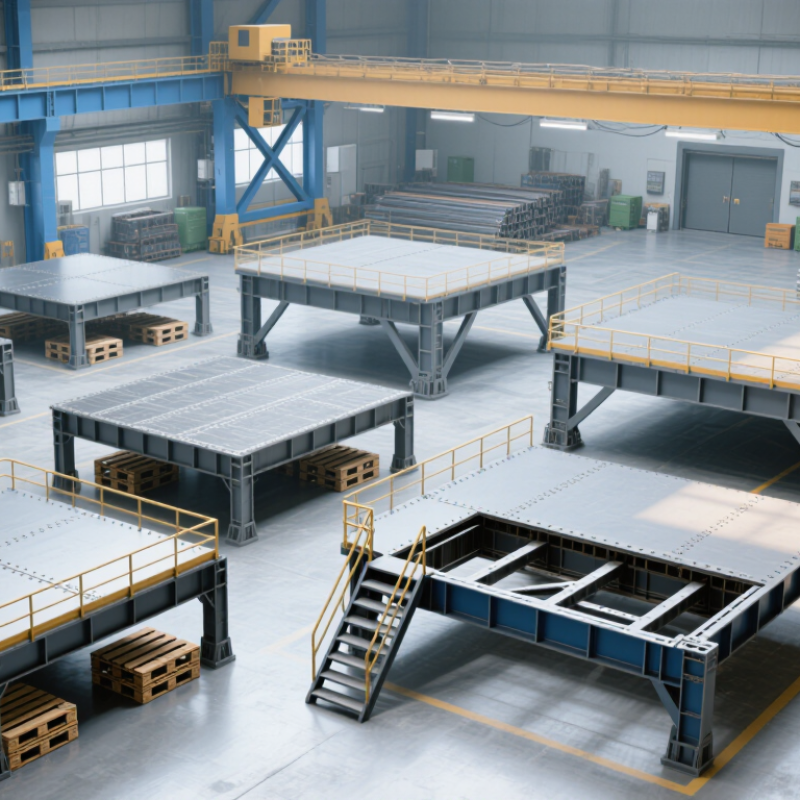
China Top 10 Steel Platforms Manufacturers for Global Buyers

What Steel Platforms Are and Why Global Buyers Need Them

Steel platforms are raised structures used for access, maintenance, inspection, storage, and production work. They may include stairways, handrails, grating, ladders, and adjustable supports. A well-designed platform gives workers a stable surface around tanks, machinery, warehouses, and processing lines. It also reduces unnecessary climbing and improves routine maintenance access.

Demand is closely linked to industrial construction. The World Steel Association’s World Steel in Figures 2024 reports 1,888.2 million tonnes of crude steel production in 2023. Its steel-use breakdown places construction at about 52% of global demand. This scale shows why platform buyers need consistent material quality and traceable engineering documents. Procurement teams should check working loads, deflection limits, surface treatment, drainage, and local safety requirements. Corrosion resistance matters near coastal sites or chemical operations. A cheaper platform may create higher maintenance costs later. That point is easy to miss.

Tips: Request drawings, load calculations, weld inspection records, and coating specifications before ordering. Confirm whether the platform supports people, equipment, or both. Allow space for tools and safe movement. Small details matter. Regional wind, seismic, and fire conditions can also change the design. ISO 14122 provides useful guidance for permanent access to machinery, but buyers should still verify national regulations and site conditions. Reports and standards support decisions, yet practical site feedback remains essential. Even experienced teams sometimes underestimate installation access.

How the Top 10 Chinese Steel Platform Manufacturers Are Selected

China Top 10 Steel Platforms Manufacturers for Global Buyers

How the Top 10 Chinese Steel Platform Manufacturers Are Selected

Selection begins with measurable production capability, not online visibility. The World Steel Association reports that China produced about 1.019 billion tonnes of crude steel in 2023. This scale creates strong supply depth, but it does not prove fabrication quality. We assess factory records, equipment capacity, engineering staff, and export experience. A serious manufacturer should provide heat numbers, mill certificates, welding procedures, and drawings that match the delivered structure.

Safety receives greater weight than marketing claims. Each candidate is checked against applicable standards, such as ISO 9001 quality controls, EN 1090 execution requirements, or project-specific national codes. Load testing matters. So does corrosion protection. Inspectors should examine weld appearance, bolt holes, coating thickness, and platform deflection under controlled loads. Small details expose weak systems.

Traceability is essential. OECD steel market reports continue to highlight global capacity pressure and uncertain demand, so low prices require careful review. A cheap quotation may hide thinner sections or incomplete testing. We also compare lead times, packing methods, inspection access, and replacement support. No ranking is flawless. Supplier websites can be polished, while factory conditions change. Independent audits and recent project evidence remain necessary before approval. Even experienced buyers can miss details during a rushed inspection.

Profiles of China’s Top 10 Steel Platform Manufacturers

China Top 10 Steel Platforms Manufacturers for Global Buyers

Profiles of China’s Top 10 Steel Platform Manufacturers

China’s scale shapes its steel-platform supply chain. The World Steel Association reported 1,005.1 million tonnes of crude steel production in China during 2024. That capacity supports customized industrial platforms, maintenance walkways, mezzanines, and loading structures for global projects.

The ten manufacturers profiled here represent different production strengths. One specializes in galvanized access platforms for humid plants. Another builds heavy-duty mezzanines for warehouses. A third focuses on modular platforms with bolted connections. One serves power facilities with grated walkways and handrails. Another produces platforms for chemical processing sites, using corrosion-resistant finishes. A sixth manufacturer handles large welded frames for cement and mining facilities. One emphasizes fast installation and containerized delivery. Another combines steel platforms with stair towers and safety cages. A ninth focuses on precision-cut components for automation plants. The tenth develops engineered platforms for offshore and coastal applications.

Their differences matter. The China Iron and Steel Industry Association reported continuing pressure on steel margins and demand in 2024, encouraging manufacturers to improve material efficiency. In practice, buyers should check load calculations, weld inspection records, coating thickness, and ISO 9001 procedures. Factory experience helps, but paperwork can still hide gaps. Some suppliers present impressive workshops yet provide weak drawings. That deserves reflection. Procurement teams should request project references, third-party inspection, and clear tolerances before approving production.

China Top 10 Steel Platforms Manufacturers for Global Buyers - Profiles of China’s Top 10 Steel Platform Manufacturers

Profile Primary Platform Category Typical Structural Materials Common Fabrication Processes Applicable Technical Standards Typical Engineering Scope Surface Protection Options Export Documentation Best-Fit Buyer Requirement
Manufacturer Profile 01 Industrial access platforms
Maintenance walkways
Carbon structural steel; galvanized grating; checker plate Profile cutting, CNC drilling, welding, dimensional inspection GB/T 700; GB/T 1591; ISO 3834; project-specific EN or ASTM requirements 2D fabrication drawings, load-point coordination, handrail and stair integration Hot-dip galvanizing; epoxy coating; polyurethane topcoat Commercial invoice, packing list, mill certificates where specified, inspection records Factories, process lines and equipment-maintenance areas
Manufacturer Profile 02 Warehouse platforms
Mezzanine structures
Rolled sections; cold-formed members; steel decking Roll forming, laser cutting, bolting, welded subassembly GB/T 700; GB/T 1591; EN 1090-1 or equivalent project specification Layout optimization, floor loading coordination, access and guardrail planning Powder coating; paint systems; hot-dip galvanizing for exposed components Assembly drawings, component schedules, fastener lists and load data Distribution centers and industrial storage facilities
Manufacturer Profile 03 Solar-panel support platforms
Service walkways
Galvanized structural steel; aluminum components where required; grating Precision cutting, punching, welding, corrosion-control inspection GB/T 13912; GB/T 1591; applicable wind and snow-load codes Array access planning, cable-route coordination, maintenance clearance design Pre-galvanized steel; hot-dip galvanizing; anodized aluminum for selected parts Material traceability records, installation drawings and corrosion-protection data Rooftop, ground-mounted and industrial solar installations
Manufacturer Profile 04 Steel stairs and landing platforms
Emergency access systems
Structural steel sections; serrated grating; checker plate; handrail tube Cutting, bending, jig welding, stair assembly and fit-up checks GB/T 700; GB/T 1591; applicable local building and workplace-safety codes Stair geometry, landing arrangement, guardrail height and access clearance Hot-dip galvanizing; zinc-rich primer; industrial paint systems General arrangement drawings, installation instructions and inspection reports Industrial plants, public infrastructure and service buildings
Manufacturer Profile 05 Pipe-rack platforms
Utility support structures
High-strength structural steel; grating; structural tubing CNC drilling, plate processing, welding, trial assembly and marking GB/T 1591; ISO 3834; AWS D1.1 or EN welding requirements when specified Equipment interface coordination, pipe clearance, access and maintenance zoning Blast cleaning, zinc-rich primer, epoxy intermediate coat and finish coat Weld maps, material certificates, coating reports and dimensional records Petrochemical, power-generation and utility projects
Manufacturer Profile 06 Heavy-duty equipment platforms
Machine access decks
Thick structural plate; rolled sections; anti-slip flooring Plasma or laser cutting, heavy-section welding, machining and load-point inspection GB/T 1591; ISO 3834; project-specific structural design criteria Concentrated-load assessment, vibration considerations, removable-panel design Industrial paint; hot-dip galvanizing for suitable components; anti-slip treatment Load calculations, weld inspection records, lifting points and packing plans Mining, manufacturing, energy and heavy industrial equipment
Manufacturer Profile 07 Modular steel platforms
Knock-down structures
Standardized hollow sections; channel steel; bolted grating panels Automated cutting, jig welding, modular drilling and factory preassembly GB/T 700; GB/T 1591; ISO 9001-based quality procedures; applicable project codes Repeatable module sizing, container-load planning and rapid site assembly Powder coating; pre-galvanizing; hot-dip galvanizing Parts lists, assembly manuals, bolt schedules and module identification records Projects requiring fast installation or phased expansion
Manufacturer Profile 08 Outdoor service platforms
Corrosion-resistant walkways
Galvanized steel; stainless steel components where exposure demands it; grating Welding, drilling, edge finishing, surface preparation and coating inspection GB/T 13912; GB/T 1591; ISO 1461 or equivalent galvanizing requirements Environmental exposure review, drainage planning and maintenance access design Hot-dip galvanizing; duplex coating systems; stainless-steel finish Galvanizing certificates, coating inspection records and corrosion-control documentation Coastal, humid, outdoor and chemically exposed environments
Manufacturer Profile 09 Custom architectural platforms
Public-access structures
Structural steel; stainless steel; perforated or architectural metal panels Laser cutting, precision bending, TIG or MIG welding, polishing and fit-up GB/T 700; GB/T 1591; applicable architectural, fire and public-safety requirements Visual detailing, concealed connections, edge protection and accessibility coordination Powder coating; fluorocarbon coating; brushed or polished stainless finish Shop drawings, finish samples, installation details and quality inspection records Visitor centers, commercial buildings and architectural installations
Manufacturer Profile 10 International EPC project platforms
Engineered steel access systems
Structural steel grades selected by design; grating; handrail and fastener systems Engineering review, CNC fabrication, certified welding, trial fit-up and final inspection GB/T 1591; EN 1090-1; AWS D1.1; ISO 3834, subject to contract requirements Multi-standard design coordination, interface management and project quality planning Hot-dip galvanizing; multi-coat paint systems; project-specified finishes Mill certificates, welding records, inspection and test plans, packing lists and export files Large overseas projects with formal technical submittal procedures
Anonymous profiles are used to avoid displaying company or brand names. Technical standards and documentation listed are commonly specified for steel platform projects; the applicable requirements must be confirmed against the buyer’s drawings, jurisdiction, loading conditions and contract documents.

Product Categories, Manufacturing Capabilities, and Quality Standards

China Top 10 Steel Platforms Manufacturers for Global Buyers

China’s steel platform manufacturers serve construction, energy, logistics, mining, and industrial maintenance projects. The World Steel Association reported China produced about 1.02 billion tonnes of crude steel in 2023. This scale supports broad product categories, including access platforms, mezzanines, walkways, stair towers, loading platforms, and modular structural frames. Buyers should compare the top ten candidates by product depth, not website appearance.

Manufacturing capability matters at the workshop level. Look for CNC plasma cutting, robotic welding, shot blasting, hot-dip galvanizing, and controlled coating lines. A capable supplier should provide material certificates, weld procedures, dimensional reports, and traceability records. ISO 9001 supports quality management, while ISO 14001 addresses environmental controls. For structural components, EN 1090 execution classes or relevant ASTM requirements may apply. Requirements vary by destination.

Small details reveal experience.

Ask for load calculations, deflection limits, slip resistance data, and installation drawings. The OECD’s Steel Market Developments reports continue to highlight global overcapacity risks, so low pricing deserves careful examination. A cheaper platform may hide thinner sections, inconsistent galvanizing, or weak inspection routines. Certificates alone are not enough. I would request recent batch records and independent inspection access. Some supplier rankings also confuse trading volume with manufacturing strength. That is an imperfect shortcut, and buyers should challenge it.

How Global Buyers Can Compare Suppliers and Choose the Right Partner

When comparing the China top 10 steel platform manufacturers, global buyers should look beyond product prices. A reliable supplier should provide mill certificates, production photos, inspection records, and clear material grades. Ask whether the certificates match the shipped batch. Small differences can matter.

Experience shows that response quality often reveals operational discipline. Compare quotation speed, technical accuracy, packaging details, and export documentation. Request a sample or a small trial order before signing a large contract. Check how the supplier handles tolerances, surface defects, delivery delays, and replacement claims. A professional partner explains limitations instead of promising everything. That honesty is valuable, though it may sometimes feel less impressive. Buyers should also verify factory capacity, quality-control procedures, payment security, and shipping experience in the destination market. Do not rely on polished website language alone.

Tips: Build a scoring sheet with quality, price, lead time, communication, and risk controls. Give each category a clear weight. Contact two or three previous customers when possible. Confirm whether production is direct or outsourced. Review every technical term with an independent engineer if your team lacks steel expertise. Keep written records of drawings, approved samples, inspection standards, and delivery dates. One overlooked tolerance can create expensive rework. Supplier comparison is not perfectly objective; freight changes, exchange rates, and production schedules can alter the final decision.

China Top 10 Steel Platform Manufacturers for Global Buyers

How Global Buyers Can Compare Suppliers and Choose the Right Partner

This buyer evaluation framework uses weighted criteria commonly applied in international steel sourcing. Product conformity and export compliance receive the highest weighting because grade accuracy, certification, documentation, and regulatory readiness directly affect project risk. Buyers can adjust the weights according to their product type, destination market, order volume, and delivery requirements.

FAQS

How should steel platform manufacturers be selected?

Selection should focus on factory capacity, engineering staff, export experience, and recent project records. Online visibility proves little.

Which documents should buyers request?

Request mill certificates, heat numbers, welding procedures, drawings, dimensional reports, and traceability records. Match every certificate with the shipped batch.

What equipment shows real manufacturing capability?

Look for CNC plasma cutting, robotic welding, shot blasting, galvanizing, and controlled coating lines. Workshop evidence matters.

Which quality standards may apply?

ISO 9001 supports quality management. ISO 14001 covers environmental controls. EN 1090 or relevant ASTM requirements may apply.

How can platform safety be checked?

Review load calculations, deflection limits, slip resistance data, welds, bolt holes, and coating thickness. Controlled load testing adds useful evidence.

Why can a low quotation be risky?

A low price may hide thinner sections, inconsistent galvanizing, or incomplete testing. Ask for recent batch records.

How can buyers compare suppliers fairly?

Use a scoring sheet covering quality, price, lead time, communication, and risk controls. Give each category a clear weight.

What should buyers check before placing a large order?

Request a sample or small trial order. Confirm production is direct or outsourced, inspect packaging, and review replacement procedures.

Are supplier rankings completely reliable?

No ranking is flawless. Websites can look polished while factory conditions change. Independent audits and recent evidence remain necessary.

What details can prevent expensive rework?

Record approved drawings, tolerances, samples, inspection standards, and delivery dates. One missed tolerance can cause costly changes.

Conclusion

This article provides a practical guide to China’s leading Steel Platforms manufacturers for global buyers. It explains what steel platforms are, including their use in industrial facilities, warehouses, construction sites, and maintenance operations, while highlighting their importance for safety, durability, and efficient access. The manufacturers are evaluated according to production capacity, engineering expertise, customization services, quality control, export experience, certifications, and customer support.

It also introduces the major product categories and manufacturing capabilities commonly available from Chinese suppliers, such as modular platforms, elevated work platforms, steel walkways, stairs, loading platforms, and customized structural systems. Global buyers will learn how to compare suppliers based on materials, design standards, welding quality, surface treatment, inspection procedures, lead times, communication, and total purchasing cost. By using these criteria, buyers can identify a reliable manufacturing partner that can deliver safe, compliant, and cost-effective solutions for different project requirements.

Amelia

Amelia

Amelia is a seasoned marketing professional with a wealth of expertise in our company’s core offerings. With an unwavering passion for driving growth and innovation, she plays a pivotal role in shaping our marketing strategies and enhancing brand visibility. A key aspect of her responsibilities......