Choosing a Warehouse Racking manufacturer in China is not just a price comparison. A system must fit the building, pallet sizes, forklift routes, and expected throughput. A small mismatch can leave aisle space wasted or make daily picking awkward. Details matter.
The 2024 MHI Annual Industry Report, produced with Deloitte, draws on a survey of nearly 1,000 supply-chain professionals. It reports that 55% expect to increase supply-chain technology investment. This is not a racking-sales statistic, and it should not be treated as one. Still, it reflects wider pressure on warehouses to improve visibility, productivity, and flexibility—needs that influence storage-system choices.
This guide compares Chinese manufacturers through practical checks: product range, engineering support, stated load ratings, quality-control processes, project references, and export service. Ask for drawings and load calculations, not only polished catalog images. Confirm what testing and inspection documents actually cover. A factory visit or independent inspection may reveal details that a sales call cannot. No ranking is perfect. Supplier capabilities vary by product line, and published claims can be hard to compare. Use the shortlist as a starting point, then match each supplier’s evidence to your site conditions and operating plans.
What Warehouse Racking Manufacturers in China Produce
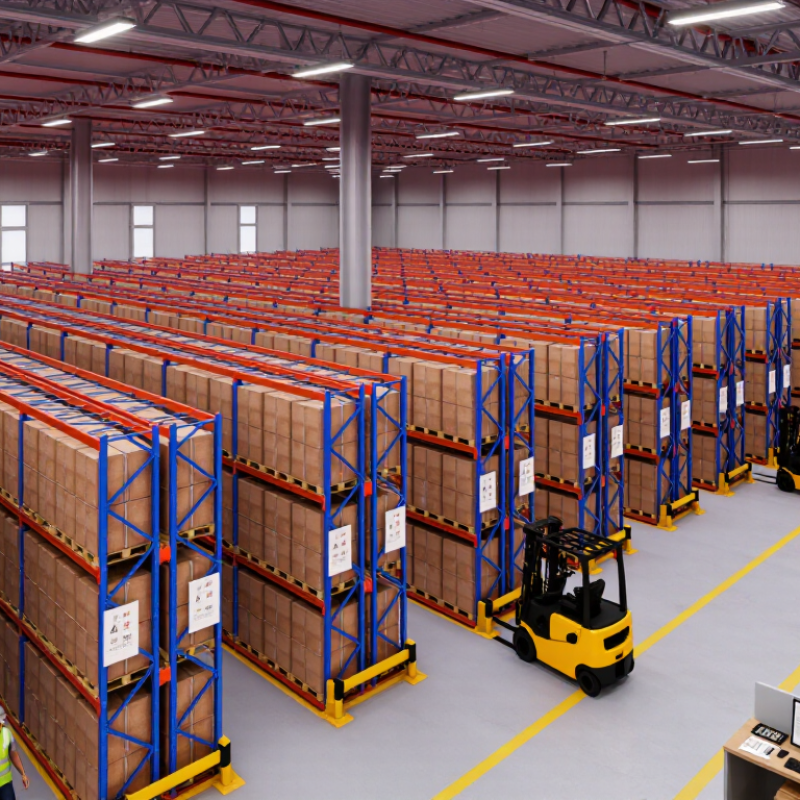
A capable Chinese warehouse-racking manufacturer produces more than basic pallet shelves. Common products include selective pallet racks, drive-in systems, push-back racks, carton-flow lanes, cantilever racks, and mezzanines. Some manufacturers also integrate shuttle systems or crane-based automated storage. Aisle width, pallet dimensions, forklift type, and floor conditions shape the right design. A rack that looks sturdy can still be unsuitable if its load rating ignores uneven pallet weights.
MHI’s 2024 Annual Industry Report found that 55% of surveyed supply-chain leaders expected to adopt robotics and automation within five years. That trend makes compatibility between rack layouts and automated equipment increasingly important. Buyers should request load calculations, drawings, steel specifications, and installation guidance—not just a price per bay. Check that beam connectors lock securely and that column guards fit busy forklift routes. Specifications can look precise; site conditions sometimes prove otherwise.
Tips: Share actual pallet sizes, maximum loads, and a warehouse layout before requesting a quote. Ask how the design handles future changes. Then have a qualified professional verify the final configuration.
How to Assess a Manufacturer’s Quality and Capabilities
How to Assess a Manufacturer’s Quality and Capabilities
Choosing a warehouse racking manufacturer in China should begin with evidence, not polished catalog photos. Ask for material specifications, load calculations, and inspection records for the exact rack configuration you plan to buy. A beam that looks substantial may still perform poorly if its steel grade, profile, or connection design is unsuitable. Request samples or visit a production site when practical. Look closely at upright perforations, weld consistency, coating coverage, and whether components fit without force. Small details matter.
Quality claims need to connect to your operation. Share pallet dimensions, maximum loads, forklift type, aisle width, floor condition, and relevant environmental requirements. Check whether the manufacturer provides a clear layout, documented load ratings, and installation guidance. Ask how ratings were tested and which assumptions they depend on; vague answers deserve follow-up. Ask for proof. Review quality-control steps, from incoming steel checks to finished-product inspections, and clarify how defects or damaged shipments are handled. A certificate alone is not the whole story.
Capability includes communication and delivery discipline. Confirm production capacity, lead times, packaging methods, spare-part availability, and who responds after installation. Compare quotations line by line, since a low price may omit anchors, guards, or technical drawings. Speak with customers whose projects resemble yours, but treat references as one input, not a guarantee. I would also keep a written record of every specification change. That sounds fussy, yet overlooked revisions can cause costly mismatches. Even careful buyers can miss something.
Major Types of Chinese Warehouse Racking Suppliers
Chinese warehouse-racking suppliers generally fall into four groups: direct manufacturers, project integrators, specialist rack makers, and trading or distribution firms. Direct manufacturers fabricate frames and beams, often offering more control over dimensions and finishes. Integrators combine racks with conveyors, software, or automated storage equipment. Specialist makers focus on systems such as drive-in, carton-flow, or mezzanine racking. Distributors can simplify purchasing, but buyers should verify who handles design, installation, and after-sales support. The categories blur. Fit matters.
The China Federation of Logistics and Purchasing reported that China’s total social logistics value reached RMB 352.4 trillion in 2023, up 5.2% year on year. This is a broad logistics indicator, not a measure of racking sales, but it shows the scale of activity behind storage demand. When comparing suppliers, request load calculations, steel specifications, coating details, and references for similar warehouse layouts. A low quotation may exclude installation or safety checks. I would not judge suppliers by factory size alone; clear drawings and dependable project coordination matter just as much.
Major Types of Chinese Warehouse Racking Suppliers
Representative pallet positions deep per storage lane by common rack system
Selective and double-deep racks offer direct access to each lane or a pair of pallet positions. Drive-in, push-back, and pallet-flow systems use deeper lanes to increase storage density. Values are representative layout examples, not supplier-specific specifications; actual lane depth depends on the facility, load, and system design.
How Products and Services Differ Across Manufacturers
Chinese warehouse racking manufacturers differ in more than steel thickness and quoted price. Some focus on selective pallet racks, which provide direct access to each pallet. Others engineer drive-in systems for dense storage, where forklift clearances and operating discipline matter. Ask for load tables, connection details, steel specifications, and installation guidance. A sample upright frame can reveal weld consistency and coating coverage. Details matter.
Service capability becomes more important as warehouses add automation. MHI’s 2024 Annual Industry Report found that 55% of surveyed supply-chain professionals were already using robotics and automation. That figure does not mean every site needs automated storage, but it highlights why rack compatibility deserves careful review. Ask manufacturers how they assess conveyor interfaces, floor conditions, seismic requirements, and future layout changes. Strong providers document assumptions and offer practical inspection support. Not always. A low quote may omit engineering checks or spare-part planning, so compare the scope line by line. References from similar facilities can help, but one limitation remains: operating conditions differ, and published capacity claims need project-specific verification.
Key Factors for Selecting a Warehouse Racking Manufacturer
Choosing a warehouse racking manufacturer starts with verified load capacity, not a polished catalogue. Ask for design drawings, beam and upright specifications, and calculations based on your actual pallet weights and forklift clearances. MHI’s 2024 Annual Industry Report found that 55% of surveyed companies planned to increase supply-chain technology investment. Racking should therefore accommodate likely changes, such as sensors or automated equipment, without sacrificing safe access. Details matter.
Check how the manufacturer tests materials and controls production quality. Request traceable steel specifications, weld inspection records, coating details, and clear guidance for inspections after installation. Confirm that the design follows relevant standards, including ANSI MH16.1 where applicable, and accounts for local seismic conditions. A low quote can hide thin documentation or limited engineering support. Measure twice.
Evaluate service as carefully as price. Ask who checks the site dimensions, supervises installation, and responds when a damaged upright needs assessment. Compare lead times, spare-part availability, warranty terms, and references from facilities with similar loads and operating conditions. A factory tour can reveal how components are labeled and protected for shipment. Not every supplier will suit every warehouse; even a capable manufacturer may need more time to adapt a standard design to awkward aisle widths or uneven floors.
FAQS
Direct manufacturers make rack components, while integrators combine racks with conveyors or automated systems. Specialist firms focus on particular rack designs; distributors coordinate purchasing. The lines can blur.
Check whether each quote includes engineering, installation, safety checks, and spare parts. Compare the scope line by line, not just the total price. Details matter.
Request layout drawings, load calculations, steel specifications, connection details, and coating information. Confirm the calculations use your actual pallet weights and forklift clearances.
Review weld inspection records and ask how materials are tracked through production. A sample upright can reveal weld consistency and coating coverage. Look closely.
No. Automation may suit some operations, but rack compatibility matters if you expect to add conveyors, sensors, or robots later.
Ask how they check floor conditions, aisle dimensions, forklift clearances, and seismic requirements. Uneven floors can complicate a standard layout.
Confirm who measures the site, supervises installation, and assesses damaged components. Also check lead times, warranty terms, and spare-part availability. This part gets overlooked.
No. Capacity claims need verification against your layout, loads, and operating conditions. Similar-project references help, but each warehouse is different. I would still check the assumptions.
Conclusion
China’s warehouse racking manufacturers produce storage systems for facilities with different layouts, inventory profiles, and handling needs. Their offerings may include selective pallet racks, drive-in systems, shelving, mezzanine structures, and customized configurations. Suppliers vary in their manufacturing scale and focus: some provide standardized products for common applications, while others specialize in engineered systems, automation-compatible designs, or tailored project solutions.
To assess a manufacturer, buyers should review material specifications, production processes, load testing, quality controls, and experience with comparable projects. Service capabilities also matter, including design support, installation guidance, delivery planning, and after-sales assistance. When selecting a Warehouse Racking manufacturer, compare product suitability, customization options, communication, production capacity, lead times, and overall value. The best choice is one that can demonstrate consistent quality and provide a safe, practical system aligned with the facility’s operational requirements.

 Hui Lian