7 Best Narrow Aisle Storage Systems for Global Buyers

Time:2026-09-23 Author:Sophia
0%

Choosing the right Narrow Aisle Storage system can transform limited warehouse space into a more productive, safer working environment. Yet the “best” solution depends on measurable conditions, not attractive catalog photographs. A facility handling cartons, pallets, or mixed inventory may require completely different equipment.

Jim Tompkins, a recognized warehouse and supply-chain management expert, has said, “The warehouse is the heart of the supply chain.” That observation remains practical today. Every aisle affects travel distance, picking speed, labor effort, and replenishment accuracy. A few centimeters can matter when an electric turret truck turns between tall pallet racks.

This guide examines seven Narrow Aisle Storage systems for global buyers. It considers selective narrow aisle racks, very narrow aisle solutions, mobile racking, pallet-flow designs, and automated alternatives. Each option is reviewed through storage density, accessibility, equipment compatibility, installation complexity, maintenance, and long-term operating value.

Look beyond capacity claims. Measure the clear aisle width. Check floor flatness. Confirm the lift truck’s turning radius. Review rack height, pallet dimensions, sprinkler clearance, and local safety requirements. Climate, seismic conditions, and available technical support also deserve attention.

No system wins everywhere. That is the uncomfortable part. A highly dense layout may slow picking, while an efficient automated system may demand greater investment and specialized service. Global buyers should compare real operating data, not only advertised specifications.

The recommendations ahead are designed to support practical decisions. They are not a substitute for a site survey or professional engineering review. Still, they can provide a clearer starting point before supplier discussions begin.
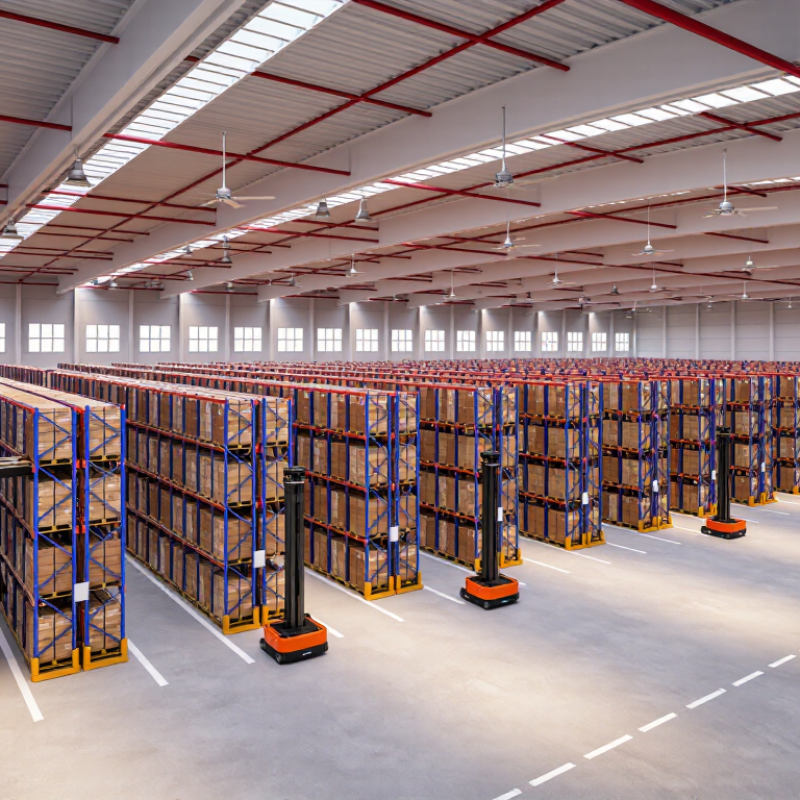
7 Best Narrow Aisle Storage Systems for Global Buyers

Narrow Aisle Storage Systems: Definition, Purpose, and Operating Principles

Narrow aisle storage systems are warehouse layouts that reduce travel space between pallet racks. They use vertical height more aggressively than conventional storage arrangements. Aisles may be about 1.5 to 2.0 meters wide, depending on the truck and load design. The purpose is clear: increase pallet capacity without expanding the building footprint. Every saved meter matters.

Their operating principle depends on specialized lifting equipment and accurate movement control. At receiving, operators place stable loads into assigned rack locations. Guided trucks then travel through narrow aisles, lift pallets, and position them at selected heights. Wire guidance, rail guidance, or camera systems can help maintain alignment. The mast and forks must match the rack depth, pallet size, and required lifting height. Small errors become serious at upper levels. A damaged floor can also disrupt smooth operation.

For global buyers, planning should begin with a site survey, not a catalog image. Measure aisle width, ceiling clearance, column positions, floor flatness, pallet dimensions, and emergency access routes. Product weight and turnover frequency also influence the correct configuration. Experienced warehouse teams often test a full loading cycle before approving the design. A layout may look efficient on paper but feel slow during replenishment. That weakness deserves attention. Local climate, operator training, maintenance access, and available power can change performance. Reliable specifications should state capacity, tolerance limits, safety features, and inspection requirements in clear terms.

Key Criteria for Comparing Narrow Aisle Storage Solutions Worldwide

Comparing narrow aisle storage systems worldwide requires more than counting pallet positions. The first practical measure is usable aisle width, matched to the turning radius and lift height of the handling equipment. A few centimeters can affect daily safety and throughput. Measure twice.

Load size, weight, and stability also shape the right configuration. Check pallet quality, rack beam capacity, and the highest storage level. Uneven floors may require leveling work before installation. That cost is easy to overlook. Temperature, humidity, dust, and coastal air can also influence materials and maintenance intervals.

Global buyers should examine seismic requirements, fire protection, inspection duties, and local installation standards. These rules differ by country and sometimes by region. Request documented load calculations, testing records, and clear operating limits from each supplier. Reliable technical support matters when a damaged frame stops an aisle. Ask about spare parts, response times, operator training, and remote troubleshooting.

Automation can improve inventory accuracy, but it is not automatically better. Software must connect with existing warehouse systems and remain usable during network interruptions. Compare travel speed, battery charging, noise, and energy consumption under real shift conditions. A short site trial often reveals awkward pallet access or poor visibility. Do not trust a perfect simulation alone. Field conditions are usually less tidy.

Seven Leading Narrow Aisle Storage Systems and Their Main Features

Seven leading narrow aisle storage systems help global warehouses use vertical space without sacrificing access.

Selective narrow aisle racking offers direct pallet access and flexible beam levels.
Very narrow aisle racking uses turret trucks for tighter layouts and higher storage density.
Reach-truck racking provides good maneuverability in aisles around 2.7 to 3.2 meters wide.
Double-deep racking stores two pallets behind each other, reducing access speed but improving cube utilization.
Mobile racking moves entire rows on floor rails.
Pallet-flow racking uses gravity lanes for first-in, first-out rotation.
Carton-flow racking supports small-item picking with sloped rollers and front-facing replenishment.

According to the 2024 Annual Industry Report from the Material Handling Industry, 55% of respondents planned to increase supply-chain technology investment.

That finding supports careful automation, but not automatic spending. A VNA system may require guidance controls, trained operators, and a level floor. Mobile racking needs stronger floor design and reliable safety interlocks. Pallet-flow lanes need accurate load dimensions. Small errors become expensive.

Site experience shows that product turnover should guide the choice. Fast-moving food packaging often fits pallet flow. Mixed-case inventory may perform better with carton flow and selective racking. Cold-storage facilities need corrosion-resistant components and protected sensors.

Measure twice. A narrow aisle can look efficient on a drawing, yet fail during battery charging, maintenance, or emergency access.

The 2024 Warehouse Automation market analysis also identified labor availability and operational complexity as major adoption concerns. Buyers should compare aisle width, lift height, load weight, fire protection, local service capability, and future SKU changes before approving the layout.

Warehouse Requirements, Equipment Compatibility, and Space Considerations

7 Best Narrow Aisle Storage Systems for Global Buyers

Warehouse Requirements, Equipment Compatibility, and Space Considerations

Narrow aisle storage begins with the building, not the rack. Measure clear height, floor flatness, column spacing, sprinkler clearance, and emergency routes. A 1.6-metre aisle may suit a turret truck, but not every reach truck. Confirm turning radius, lift height, battery-change space, and load-centre limits before selecting pallet flow, push-back, double-deep, mobile, drive-in, selective, or very-narrow-aisle systems. Small errors become expensive quickly.

Equipment compatibility matters more than catalogue capacity. Check the truck’s minimum aisle width under the actual pallet size and load condition. A 1,000-kilogram load at 1,200 millimetres behaves differently from a compact carton load. Rail guidance, wire guidance, mast height, camera visibility, and operator training also affect performance. The 2024 MHI Annual Industry Report, produced with Deloitte, reported that 55% of respondents expected increased supply-chain technology investment. That trend supports automation, but it does not justify automating an unsuitable layout.

Space gains need practical testing. Measure inbound peaks, SKU turnover, pallet dimensions, and replenishment frequency for at least four representative weeks. High-density drive-in storage can reduce selectivity. Mobile racks can improve cube use but may slow access during peak picking. Very-narrow aisles increase storage positions, yet floor tolerances and vehicle control become critical. No layout model is perfect. I would test one aisle with real pallets, real operators, and a simulated fire inspection before approving a global rollout. Mistakes often hide in the corners.

7 Best Narrow Aisle Storage Systems for Global Buyers

Representative operating aisle widths for common warehouse storage systems. Narrower aisles can increase storage density, but equipment compatibility, pallet dimensions, load weight, floor accuracy, fire protection, and operator requirements must also be evaluated.

Very narrow aisle and automated crane systems generally provide the greatest space efficiency. Selective, double-deep, drive-in, push-back, pallet-flow, and mobile systems typically require wider operating aisles but may offer easier access, lower automation requirements, or better compatibility with existing fleets. Values are representative planning ranges and should be confirmed during warehouse layout and equipment selection.

How Global Buyers Can Select the Right Narrow Aisle Storage System

Global buyers should select a narrow aisle storage system from daily operating conditions, not catalog photographs. Measure aisle width, rack height, pallet dimensions, floor flatness, and turning space. A small measurement error can restrict truck movement for years. Warehouse visits reveal problems that drawings often miss.

Seven common options deserve comparison: selective pallet racking, very narrow aisle racking, double-deep racking, drive-in racking, push-back racking, pallet flow racking, and mobile racking. Selective systems offer fast access, while double-deep designs increase density but reduce direct access. Drive-in storage suits stable products with limited stock rotation. Pallet flow supports first-in, first-out handling, but requires consistent pallet quality. Mobile systems save floor space, although installation and maintenance can be more demanding.

Equipment compatibility matters. Confirm lift height, load capacity, battery charging space, and operator visibility. Automated systems may reduce labor pressure, but they need reliable software, sensors, and trained technicians. Request load calculations, structural drawings, inspection records, and local compliance documents. Service response should be tested before purchase. Ask who handles repairs during a holiday shutdown.

Do not judge performance from density alone. Product turnover, expansion plans, fire protection, and worker training can change the best choice. I have seen dense layouts create slower picking because travel paths became awkward. That mistake is easy to repeat. A small pilot area, using real pallets and real operators, often exposes costly assumptions before full installation.

7 Best Narrow Aisle Storage Systems for Global Buyers - How Global Buyers Can Select the Right Narrow Aisle Storage System

Storage System Typical Aisle Width Storage Density Typical Load Configuration Typical Lift Height Best Application Main Advantages Key Limitations Global Buyer Selection Check
Very Narrow Aisle (VNA) Pallet Racking About 1.5–2.0 m Very high; often uses most of the available floor area Selective pallet positions with direct access Approximately 8–18 m, depending on equipment and building design High-SKU warehouses requiring direct access to many pallet locations Excellent space utilization, high selectivity, and accurate location control Requires specialized lift trucks, smooth floors, guidance systems, and trained operators Confirm local service support, spare-parts availability, floor flatness standards, and operator-training requirements
Reach Truck Narrow Aisle Racking About 2.4–3.0 m High, with good balance between capacity and accessibility Single- or double-deep selective pallet storage Approximately 6–13 m General distribution centers with mixed pallet sizes and frequent replenishment Flexible operation, direct pallet access, and lower infrastructure complexity than VNA systems Uses more aisle space than VNA and may have lower productivity in very high-density layouts Compare residual capacity at maximum lift height, turning radius, battery standards, and local electrical requirements
Double-Deep Pallet Racking About 3.0–3.5 m High; generally increases pallet positions compared with single-deep layouts Two pallets deep per storage lane Approximately 6–12 m Operations holding multiple pallets of the same SKU or low-to-medium SKU variety More storage positions without fully adopting automated equipment Reduced selectivity; the front pallet normally needs to be moved to reach the rear pallet Check inventory rotation rules, pallet uniformity, load depth, and whether last-in-first-out storage is acceptable
Mobile Pallet Racking One active aisle, typically about 2.8–3.5 m Very high; multiple aisles can be closed when not in use Selective pallet racks mounted on powered mobile bases Approximately 6–12 m Cold rooms, archives, high-cost real estate, and facilities needing high capacity in a limited footprint Can provide high density while retaining selective access to pallet locations Higher initial cost, slower access when aisles must open, and greater dependence on controls and maintenance Evaluate floor load, seismic design, emergency egress, temperature conditions, and maintenance response time
Pallet Shuttle Narrow Aisle System About 1.4–1.8 m for shuttle lanes; access aisles vary by layout Very high; deep lanes minimize the number of access aisles High-density FIFO or LIFO pallet lanes served by powered shuttles Approximately 6–12 m for common pallet shuttle installations High-volume, low-SKU operations with repeated pallet movements Reduces forklift travel inside lanes, improves operator safety, and supports dense storage Less suitable for highly mixed SKU profiles and requires charging, controls, and shuttle maintenance Validate pallet quality, temperature range, radio-control reliability, battery management, and system redundancy
Automated Storage and Retrieval System (AS/RS) About 1.2–1.8 m between storage positions; service access is system-specific Very high, with vertical space used efficiently Automated pallet or tote storage served by cranes or other robotic equipment Approximately 10–30 m or more, subject to design and local building constraints Large-scale, high-throughput facilities with stable processes and strong inventory data High throughput potential, consistent accuracy, reduced manual travel, and strong traceability High capital cost, longer implementation, software dependence, and specialized technical support needs Assess total cost of ownership, integration standards, cybersecurity, local automation expertise, and business continuity plans
Carton Flow and Order-Picking Narrow Aisle System About 1.8–2.5 m for manual picking aisles High for carton and case-pick inventory Cartons, totes, cases, and small-unit loads on inclined flow lanes Usually 2–8 m for manual picking zones E-commerce, retail replenishment, spare parts, and high-SKU case-picking operations Supports first-in-first-out rotation, clear product presentation, and efficient picker movement Not designed for every pallet-storage requirement; lane replenishment and carton compatibility are important Confirm carton dimensions, load weight, picking rate, replenishment method, and compatibility with local packaging standards
Buyer Note: Aisle widths and lift heights are indicative planning ranges rather than fixed specifications. Final dimensions should be verified through a site survey covering pallet size, load weight, rack configuration, floor flatness, fire protection, seismic conditions, building height, equipment clearances, and applicable local safety regulations.

FAQS

What should be measured before choosing a narrow aisle storage system?

Measure clear height, floor flatness, column spacing, aisle width, and emergency routes. Measure twice. Also check turning space, sprinkler clearance, and battery-changing areas.

Which system provides the fastest pallet access?

Selective racking provides direct access to every pallet position. It suits mixed inventory and frequent picking. Density is lower than some alternatives.

When is very narrow aisle storage useful?

Very narrow aisle storage suits warehouses needing more vertical positions. It usually requires specialized trucks, guidance controls, level floors, and trained operators. Small layout errors can create daily delays.

What are the main advantages and limitations of double-deep storage?

Double-deep storage places two pallets behind each other. It improves space use but reduces direct access to rear pallets. It works better with predictable inventory movement.

When is pallet-flow storage a practical choice?

Pallet-flow storage suits fast-moving goods requiring first-in, first-out rotation. Gravity lanes move pallets toward the picking face. Pallet dimensions must remain consistent. Otherwise, flow may become unreliable.

How does carton-flow storage support small-item picking?

Carton-flow storage uses sloped rollers and front-facing replenishment. It helps workers pick small items without entering deep rack locations. It fits mixed-case inventory with frequent order activity.

Can mobile racking always maximize warehouse space?

Mobile racking can reduce unused floor space by moving entire rows on rails. It may slow access during peak picking periods. The floor needs suitable strength and accurate installation. Not always faster.

How should buyers test a proposed layout?

Run a pilot aisle using real pallets, actual operators, and representative product turnover. Test charging, maintenance, emergency access, and fire-clearance conditions. Drawings can hide awkward travel paths. I would test before approval.

Conclusion

Narrow Aisle Storage systems are designed to increase warehouse capacity by reducing the space required between storage racks while maintaining safe and efficient access to inventory. They typically rely on specialized handling equipment, guided travel, adjustable rack configurations, and organized operating procedures. This article explains the purpose and operating principles of Narrow Aisle Storage, then compares leading solution types according to storage density, accessibility, throughput, safety, flexibility, installation needs, and total operating cost.

It also reviews seven major Narrow Aisle Storage system options, highlighting their main features and suitable applications. Global buyers will learn how to assess warehouse dimensions, aisle width, ceiling height, floor conditions, load characteristics, equipment compatibility, fire-safety planning, and future expansion requirements. By matching these factors with business volume, product variety, budget, and operational priorities, buyers can select a reliable storage solution that improves space utilization, supports efficient inventory handling, and remains adaptable to changing warehouse demands.

Sophia

Sophia

Sophia is a dedicated marketing professional with an exceptional depth of knowledge about her company's products and services. With a keen understanding of market trends and customer needs, she crafts insightful blog posts that not only inform but also engage readers, enriching the company’s online......